

Programma Erasmus+ KA131 Blended Intensive Programme
UNINA Proposing Person Federica VISCONTI
Department Architettura
BIP Title AMERICAN LESSONS and INVISIBLE CITIES Translating text in architecture in the occasion of the centenary of Italo Calvino’s birth
Partners
1. Università degli studi di Napoli “Federico II”, Italy (Host Institution) prof. Federica Visconti, prof. Renato Capozzi
2. Universitatea de arhitectură şi urbanism Ion Mincu din Bucureşti, Romania prof. Oana Diaconescu, prof. Beatrice Joger
3. Cracow University of Technology, Poland prof. Tomasz Kozłowski, prof. Anna Mielnik, prof. Marek Początko
4. Univerza v Ljubljani, Slovenia prof. Paul O. Robinson
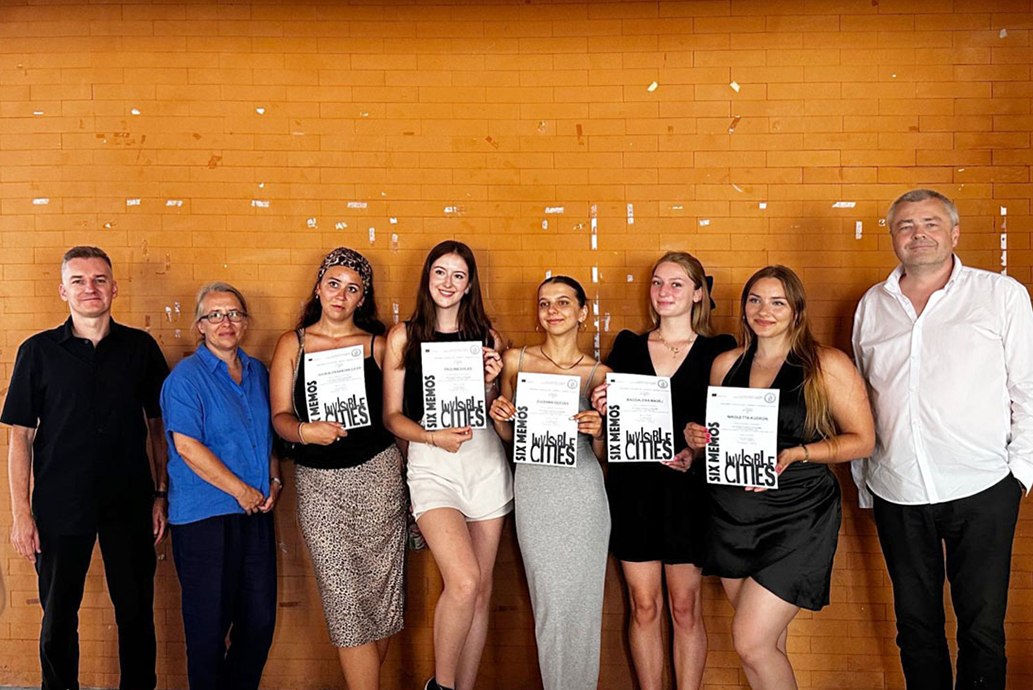
5. Cracow University of Technology, Poland, Faculty of Architecture students:
- Julia Cichy
- Zuzanna Dębska
- Paulina Gołąb
- Nikoletta Kudroń
- Magdalena Madej
2023 has been the centenary of Italo Calvino’s birth. About biographical data, Calvino said «Biographical data: I am still one of those who believe, with Benedetto Croce, that only the works of an author count (when they count, of course). Therefore, I don’t give my biographical data, or I give them false […]». Thus, the project assumes the centenary as an occasion but ignores the biography focusing on his works and, in particular, on those that have always constituted an important reference in the field of Architecture: the Six Memos for the Next Millennium (in Italian Lezioni Americane), on one hand, and The Invisible Cities, on the other.
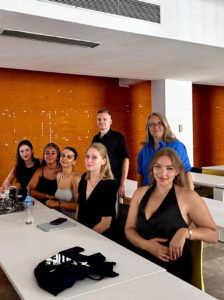
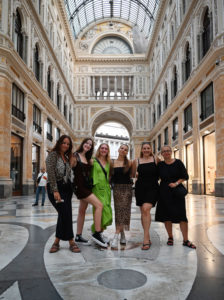
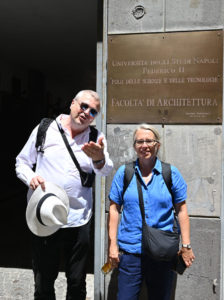
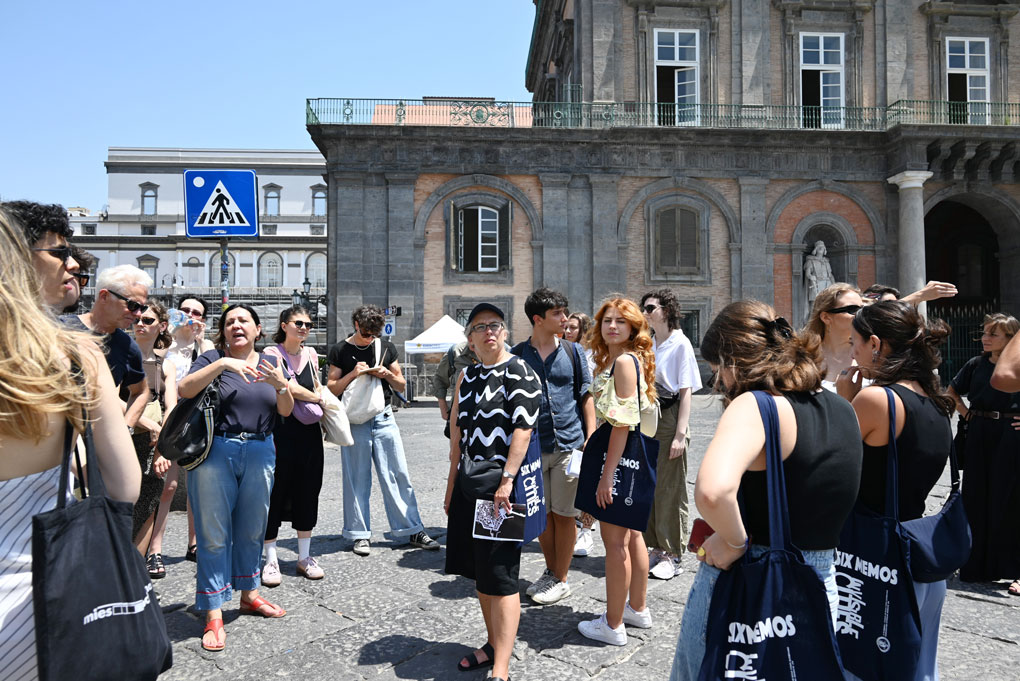
VIRTUAL COMPONENT
The virtual component will have as object the Six Memos for the Next Millennium.
In 1984 Italo Calvino was invited by Harvard University to give the very important “Charles Eliot Norton Poetry Lectures”: six lectures with a very open program scheduled for the academic year 1985-86. The topic Calvino decided to face was about the main literary values he thought have to be recommended to the next millennium. By September 1985, before his departure to Harvard, he had written five of this lectures but he never gave them due to a sudden death. Thus, we have five of the six texts but we know the title of the last. Lightness, Quickness, Exactitude, Visibility, Multiplicity and Consistency are the values Italo Calvino, author of Why Read the Classic?, wanted to discussand represent an attempt to define the virtues (of the literature) of the past in order to shape, in continuity, the values of the future.
From a theoretical point of view, the BIP program wants to affirm that it is possible to observe a relationship of analogy with some procedures of literature, music and architecture. Even if very often we can hear talking of Architecture in relationship with Painting and Sculpture (‘sister arts’), the deeper relation with Literature and Music is based on the common procedure of ‘composition’. First, Music, Literature and Architecture work composing elements that assume meaning and ‘form’ in their putting together by an author following some rules but also with an artistic component. The elements of Music are the notes, of Literature are the words while more difficult is the definition of the elements of Architecture but, only to give an example, if we look at the ancient temples we can recognize elements not more reducible in the columns, in the crepidoma, in the architrave, in the tympanum. A second aspect is that of a special capability that belongs to the mind of musicians, poets and architects. In the same way the musician can hears the music he is composing in his mind (not with his ears), the poet can hears the ‘sound’ of his words before pronouncing them with his voice. But also the architect has a special ‘abstract’ capability: to see with his mind (not with his eyes) the space he is designing before – or while – he is drawing it. In the end, musicians, poets and architects produce ‘social objects’ – the music sheet, the written text, the project – that can be given to others to sing, to recite, to build: in all the cases this constitutes a kind of gift for a community.
Starting from this, the BIP program, in its virtual component, proposes Lectures that interprets the values proposed by Italo Calvino translating them in terms of architecture, with special reference to only one work of architecture that is considered exemplar of each of Calvino’s values (for instance the Neue Nationalgalerie by Mies in Berlin on Exactitude) asking the students to produce an exercise of re-interpretation of a work of architecture, in drawing and words.
IN-PERSON COMPONENT
The physical component will have as object The Invisible Cities.
The 55 Invisible Cities, object of the Dialogues between Marco Polo and Kublai Kahn, constitute a work of extraordinary value for its capability to evoke, through a description, spaces and places but also, as Calvino himself stated in an interview given on the occasion of the release of Invisible Cities, a set of reflections on the role of modern megacities. The passage between the big city (still definable) and the metropolis (huge and unknowable) is analogous to the philosophical one between the ‘modern’ and the ‘post-modern’ condition: abandoned the Grand récit of tradition, the metropolis seems programmatically giving up an order (cósmos) and pursues disorder (cáos) as the only reproducible device. The metropolis – in Cacciari’s thought – from pólis becomes urbs or better civitas augescens (without boundaries) and, if the pólis was based on the ghénos, on the community and had in itself the idea of péras, of ‘limit/border’, of nomos understood as ‘norm’, the urbs as what is defined only by its administrative laws contains instead the possibility of infinite growth (a-péiron). In Massimo Cacciari’s reasoning there is the idea that, in this way, the contemporary city has lost the function for which it was born: donating places.
Somehow, Italo Calvino’s Invisible Cities do not share this pessimism, “his” cities are still characterized by their own identity, perhaps it is a question of developing new critical tools for reading a complexity unknown in the past to discover that all the 55 invisible cities visited by Marco Polo are co-present, sometimes juxtaposed, sometimes even superimposed, in the contemporary city.
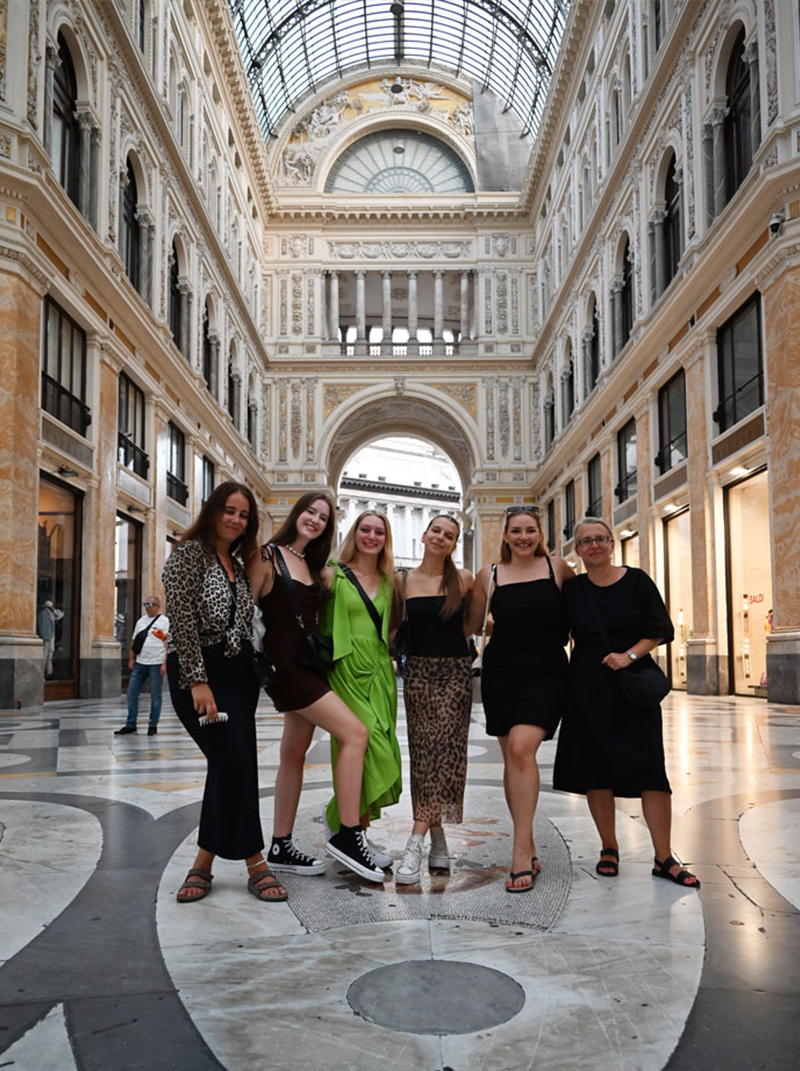
In Invisible Cities, Kublai Khan asks Marco Polo why he never speaks of his city, Venice. But Marco Polo answers that every time he describes a city, he is saying something of Venice because “to distinguish the quality of the others [cities] I must start with a first one that remain implicit. For me is Venice”. Naples – with many other stratified cities and with its millenary history – can be the object of an analysis that aims to describe this special feature: many cities within a city. The idea of manifold “things” residing within the boundaries of a singular, nonetheless complex, thing, alludes to (analogously speaking) multifarious architectural signs, constructs and forms. And what are the collected descriptions – the chapters – within Invisible Cities if not a deep dive into the forms of analogy?
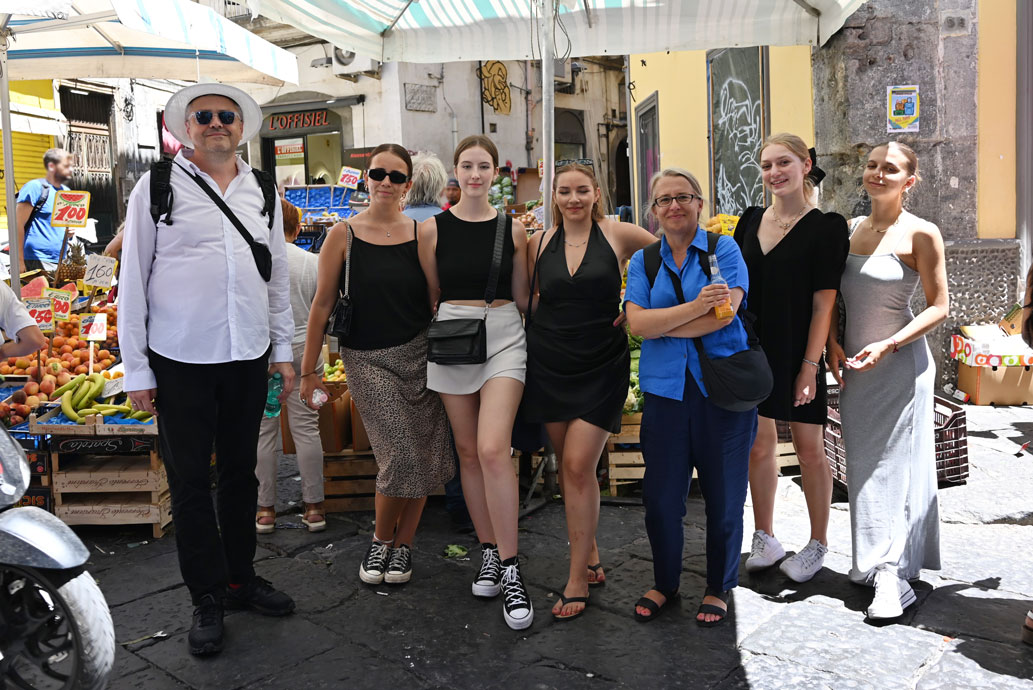
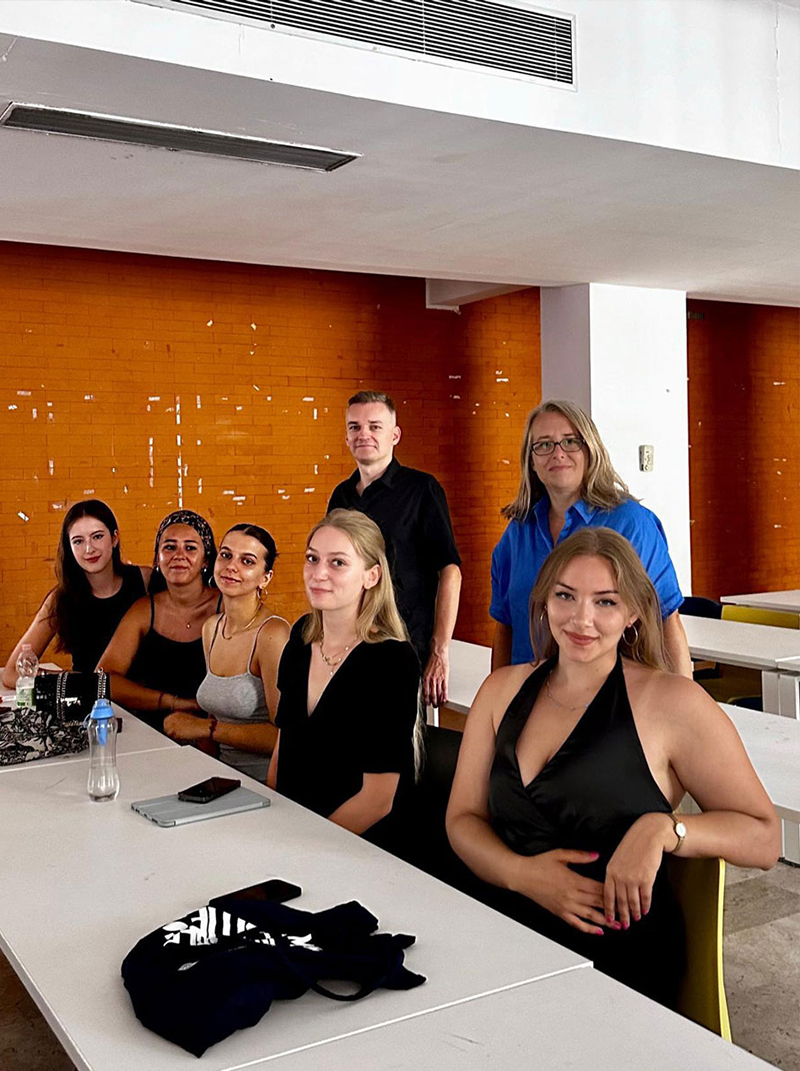
In the phase of the physical component, the students, divided into groups under the guide of one or more professors, will work individually to find, inside the invisible cities as an archive of forms, analogical artefacts that could be used to create site-specific intervention within the palimpsestic collage of Naples. Critical texts, visual and written diary and maps of “analogous Naples” should be the outcomes of the in person activity to be presented in the last day and be collected in a book.
BIBLIOGRAPHY
I. Calvino [1988], Six Memos for the Next Millennium, Penguin Classics 2016
I. Calvino [1972], Invisible Cities, Houghton Mifflin Harcourt, 1974
Other editions (also in other languages if available can be used)
On analogy and the methodological approach (all with English texts):
A.Rossi, La città analoga, tavola in «Lotus», n.13, 1976, pp. 4-7.
M. Tafuri, Cecì ne past in ville in «Lotus», n.13, 1976, pp. 8-10.
O.M. Ungers, R. Koolhaas, P. Riemann, H. Kollhoff, A. Owaska, La città nella città in «Lotus», n.13, 1978, pp. 82-97.
F. Visconti, Esercizi di analogia, Thymos Books, Naples 2022